Tuesday, 30 August 2011

What Lay People Should Know about the Internet – History of the Invention (technical)

by Zad Datu


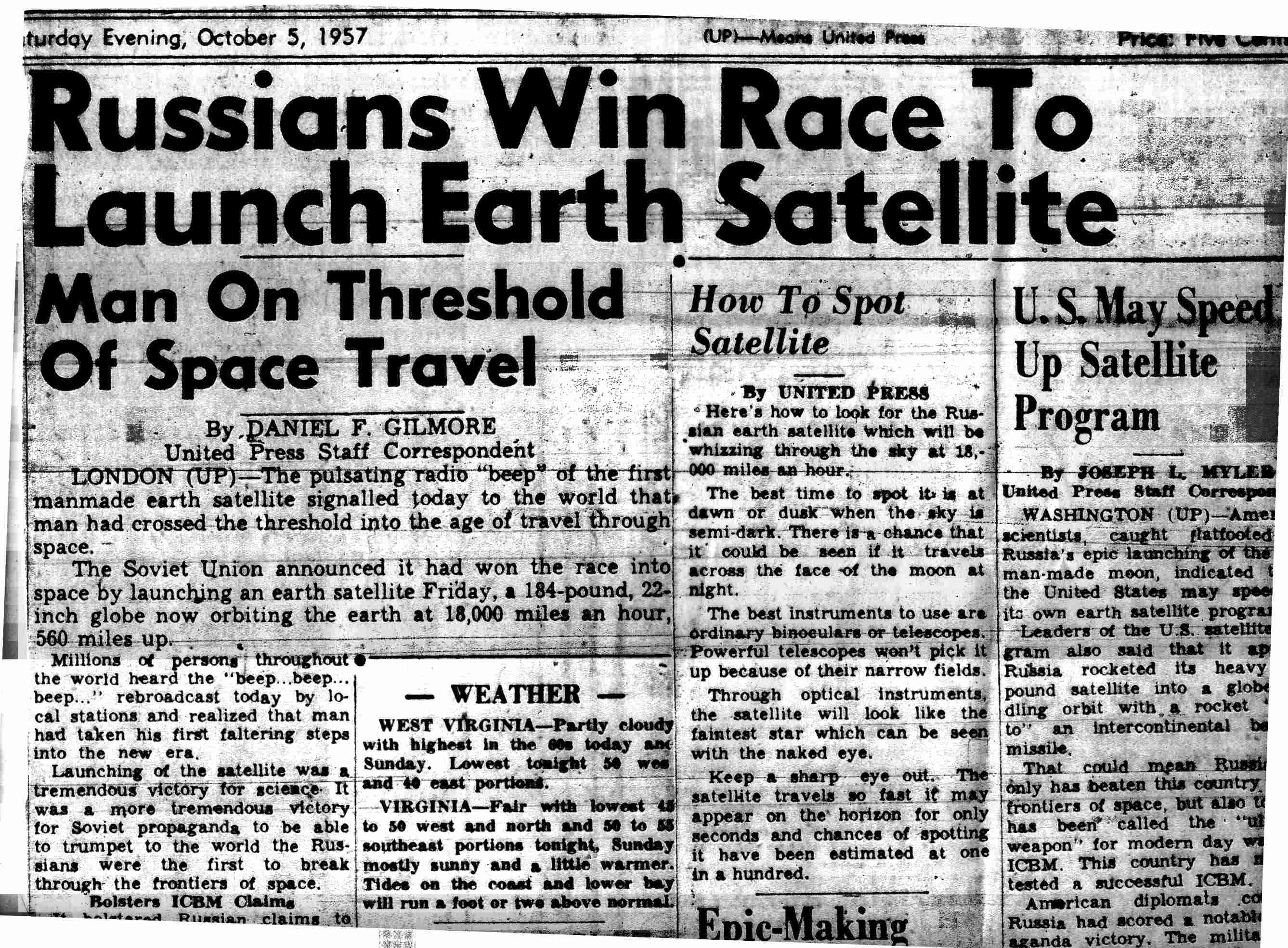
At the brink of the Space Race, on October 4th 1957, the Soviet Union successfully launched Sputnik 1 defeating the United States’ Project Vanguard to launch the first manmade satellite into orbit. Soon after in the following December 6th, Vanguard TV3 was launched. But just after four feet of ascend about two seconds after liftoff, the rocket fall back to the launch pad exploding and destroying itself damaging the launch pad along with it.

In response to the Sputnik Crisis and the spectacular televised failure of Vanguard TV3, the Advanced Research Projects Agency (ARPA) of the US Department of Defense was formed, now known as DARPA. The agency’s emphasis was initially centred to space, ballistic missile defence, and nuclear test detection. But it too had its focus on computers.

Many revolutionary technological inventions like the radar, the jet engine, and scientific innovations like the discovery of atomic fusion, were inventions fuelled by the features and capabilities which war necessitates. In the case, the Cold War necessitated to the Internet.

How it All Began
J.C.R. Licklider of MIT was the man with the vision. In 1962, he was chosen by the director of ARPA, Jack Ruina to join the agency to create and manage a programme for funding research to improve the military’s use of computer technology. He became the first director of the Command and Control Research Department at the agency, now known as the Information Processing Technologies Offices (IPTO). This was when he first wrote his memos on the Intergalactic Network or Galactic Network – the first ever concept of what is now known as the internet. He is especially famous for writing two papers, which were Man-Computer Symbiosis published in 1965 which speaks of the aims “let computers facilitate formulative thinking as they now facilitate the solution of formulated problems, and to enable men and computers to cooperate in making decisions and controlling complex situations without inflexible dependence on predetermined programs”, and The Computer as the Communication Device published in 1968 co-written by the successor of his successor, Ivan Sutherland, Robert W. Taylor.

Joseph Carl Robnett “J.C.R” Licklider “Lick” had the first vision of an Intergalactic Network now known as the Internet.

One of the first and most crucial inventions which lead to the development of the internet is packet switching, the process which breaks information or various numbers of data into ‘packets’ of data, which are then sent through the network or communication line individually. The term ‘switching’ refers to the discontinuity of the transferring of these packets through the network. A connected network of computers have many pathways to move information from one station to the next, and if a computer somewhere in the network disconnects, these independently travelling packets would individually find other routes to get to its target location, and this is what is meant by discontinuity. As all these packets reach their target, they are assembled back together as how they were before they left its source.


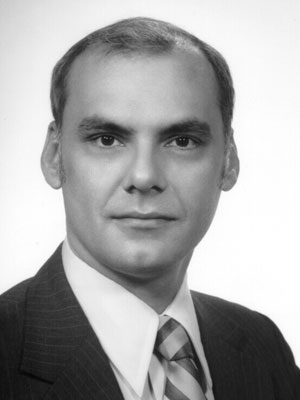
Lenoard Keinrock (left) in published a paper on digital message switching in 1961. Paul Barand (centre) and Donald Watts Davies (right) and independent invented packet switching in the early 60s.

The packet switching concept was a parallel invention in the early 60s first developed by Paul Baran of RAND (Research And Development) in the U.S. within the timeframe of ARPA in which he called ‘message-blocks’, and independently by Donald Davies at the National Physical Laboratory in the UK, in which he called ‘packet-switching’.

As an electrical engineer at RAND, Barand was asked to research into the survivability of the communications network for the U.S. Air Force. It was his 1964 paper titled On Distributed Communications which documents the breakthrough concept of packet switching. The paper describes the robustness of the communication system, whereby no matter how much damage was done to individual components of the network, without a central control and as long as the end-to-end communication is not lost, the information will still pass through. This was upmost important to military use as the Cold War was still ongoing. Although, there was an earlier research and a published a paper of relating field mostly on digital message switching in July of 1961 by Leonard Kleinrock titled Information Flow in Large Communications Net whom later played a major role in ARPA.
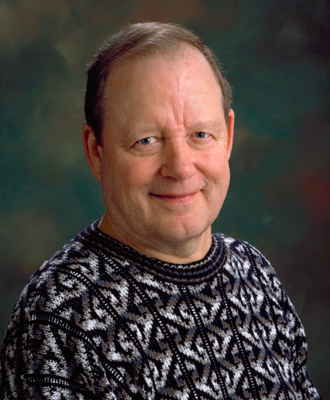
Lawrence G. Roberts (right) was persuaded by Robert William “Bob” Taylor (left) to join ARPA to become the ARPA IPTO Chief Scientist in December 1966.

In October 1966, Lawrence G. Roberts of MIT and head of Lincoln Laboratory published a paper titled Toward A Cooperative Network Of Time-Shared Computers. Roberts was persuaded by the third director of ARPA, Robert Taylor to leave MIT and join ARPA. Initially resisting, in December that year, he finally gave in as the ARPA IPTO Chief Scientist in December 1966. In 1967 Roberts, Baran and Davies became aware of each other’s work at an Association of Computing Machinery conference where they met and the term packet-switching was adopted. This is where ARPANET programme (ARPA Network programme) was first conceptualised based on Roberts’ paper and the packet switching technology.

It is August 30th, 1969 that marks the birth of ARPANET, the predecessor of the Internet, hence also the birth of the internet as well. An IMP (Interface Message Processor) was successfully delivered from BBN (originally Bolt, Beranek and Newma), a high-technology company which provides research and development services, to Klienrock’s Network Measurement Centre at UCLA (University of California, Los Angeles) becoming the first node of the ARPANET. The next nodes to emerge was SRI (Stanford Research Institute) and UCSB (University of California, Santa Barbara). Then more and more nodes emerged adding on to the network at a rate of around one per month. This was virtually unknown until the International Conference on Computer Communication in Washington DC in October 1972. By then, the ARPANET is no longer just about military use, and BBN from then until now remains a defence contractor for ARPA.

Competition between the Networks
The next field of the application of computing network after military use is education. Many institutions and universities started to develop their own network. Many other networks beside the ARPANET were developed for the purpose of quick data sharing, some of which are still extensively used until today and some no longer. ALOHAnet, for example, went into operation in 1970 at the University of Hawaii under the leadership of Norman Abramson which later connected to ARPANET in 1972, but it is no longer in use today. But Ethernet, which refers to the widely and still used today Local Area Network (LAN), is based on ALOHAnet’s protocol. BITNET, developed in 1981 by Ira H. Fuchs of City University of New York and Greydon Freeman of Yale University too faded away but did have a fare share of success around 1991 to 1992. But in the following years, it was later outnumbered by the number of connections to the successor of ARPANET, the Internet. By year 2000, BITNET’s remaining heritage mailing lists in regular use was a Blues music discussion group. Although, in 1988, BITNET did merge with another network the, CSNET (Computer and Science Research Network) to form CREN (Corporation for Research and Educational Networking) which is still somewhat in use today.

CSNET started its development in 1979, lead by L. H. Landweber and sponsored by the National Science Foundation, which helped introduce and popularised what was fast becoming the internet outside ARPANET to universities around the world. These universities naturally chose ARPANET’s network protocol, TCP/IP, which played a crucial role in ARPANET’s success. CSNET led directly to the development of the National Science Foundation Network (NSFNET). NSFNET was later officially dissolved on April 30th, 1995. Although, it did retained a core research network for research only use called the Very High Speed Backbone Network Service (vBNS).

Other networks which remain active until today are FidoNet and USENET. FidoNet is an amateur electronic mail network with over 15,000 mail nodes world wide, most publicly accessible Bulletin Board Systems (BBS) incorporated as a company in 1986. By 1998, FidoNet had about 30,000 nodes world wide, and it remains active into the 21'st century. USENET was developed in a similar manner to the other networks after ARPANET, where Jim Ellis and Tom Truscott, graduates from Duke University wanted similar capabilities of the mailing list on ARPANET for universities which weren’t doing research with the by-then-called DARPA, where in 1973, ‘D’ was added to stand for Defense and Research Project Agency. USENET was originally developed to share files between computers, but evolved into a net-wide hierarchy of the eight major categories plus a catch-call.


The advantage which ARPANET had over other networks is it being affiliated to BBN. What made ARPANET a stronger competitor among the networks were the invention of the E-mail and the development of the TCP/IP protocols, both advancements were from BBN developed in the 70s for ARPANET. This lead to other networks developing similar mailing and protocol systems of and for their own. Both E-mail and TCP/IP later became the standards of their type in the 80s. This one decade long duration of development to standardisation shows the resistance of other networks to make a switch from their own convention to the ARPANET’s convention.

ARPANET to Internet
The email was invented by Ray Tomlinson under BBN for ARPANET as part of a small group of programmers who were developing a time-sharing system called TENEX and was making improvements on a single-computer electronic mail programme called SNDMSG. The world’s first messages between two computers connected only by a computer network, the ARPANET, were sent in late 1971. The next release, TENEX, went out in early 1972 and included the version of SNDMSG with network mail capabilities. He develops the ‘user@host’ convention, choosing the ‘@’ sign arbitrarily from the non-alphabetic symbols on the keyboard. Other later networks with emailing capabilities chose other characters, and it was not until the late 1980s when ‘@’ finally become a worldwide standard.

 
Raymond Samuel “Ray” Tomilson invented the E-mail and implemented the famous '@' standard where the first email was sent in 1971.Vinton Gray “Vint” Cerf (left) and Robert Elliot “Bob” Kahn worked together under Lawrence G. Roberts to invent the TCP/IP protocol in 1973.

In 1973, Robert Kahn from BBN and Vint Cerf from Stanford joins the DARPA, to work for Lawrence Roberts in connecting ARPANET with other networks. By September 1973, the two gave their first paper on the new Transmission Control Protocol (TCP) at an International Network Working Group meeting (INWG meeting) at the University of Sussex, England. The term “internet” was adopted in the first RFC (Request for Comments) published on the TCP protocol, RFC 657. In technical terms, internet referrers to any network using the TCP/IP protocol.

Sooner, many other networks develop their own protocols, and it was only in 1984 onwards was when TCP/IP started its way to become world the standard. The US Department of Defence made the TCP/IP the standard for all military computer networking, which provided the protocol a higher profile and stable funding, and Dan Lynch and the Internet Architecture Board held a three day workshop on TCP/IP for the computer industry attended by about 50 researchers and 250 vendor representatives in 1985 which lead to several development of TCP/IP networking products by various companies. This is what lead to the development of the modern internet.

Before and Beyond
The previous services which the internet advanced from were of course those in the field of communications such as the electric telegraph, telephone, wireless telegraphy more commonly known as radio, and television. But as it did so from telegraph to telephone, telephone to radio and radio to television, the newer technologies simply outclassed the previous but not replace it, except for telegraphy-to-telephones. Although telephones completely made telegraphy obsolete, the submarine communications cables linking continents which used to carry telegraphy traffic now carries telephone traffic. Subsequently, the internet utilises and integrated with these telephone lines. In fact and clearly, the whole existence of the internet relied on the existence of telephones.

How the internet allowed the sharing and access of information with speed changed how the world operates.
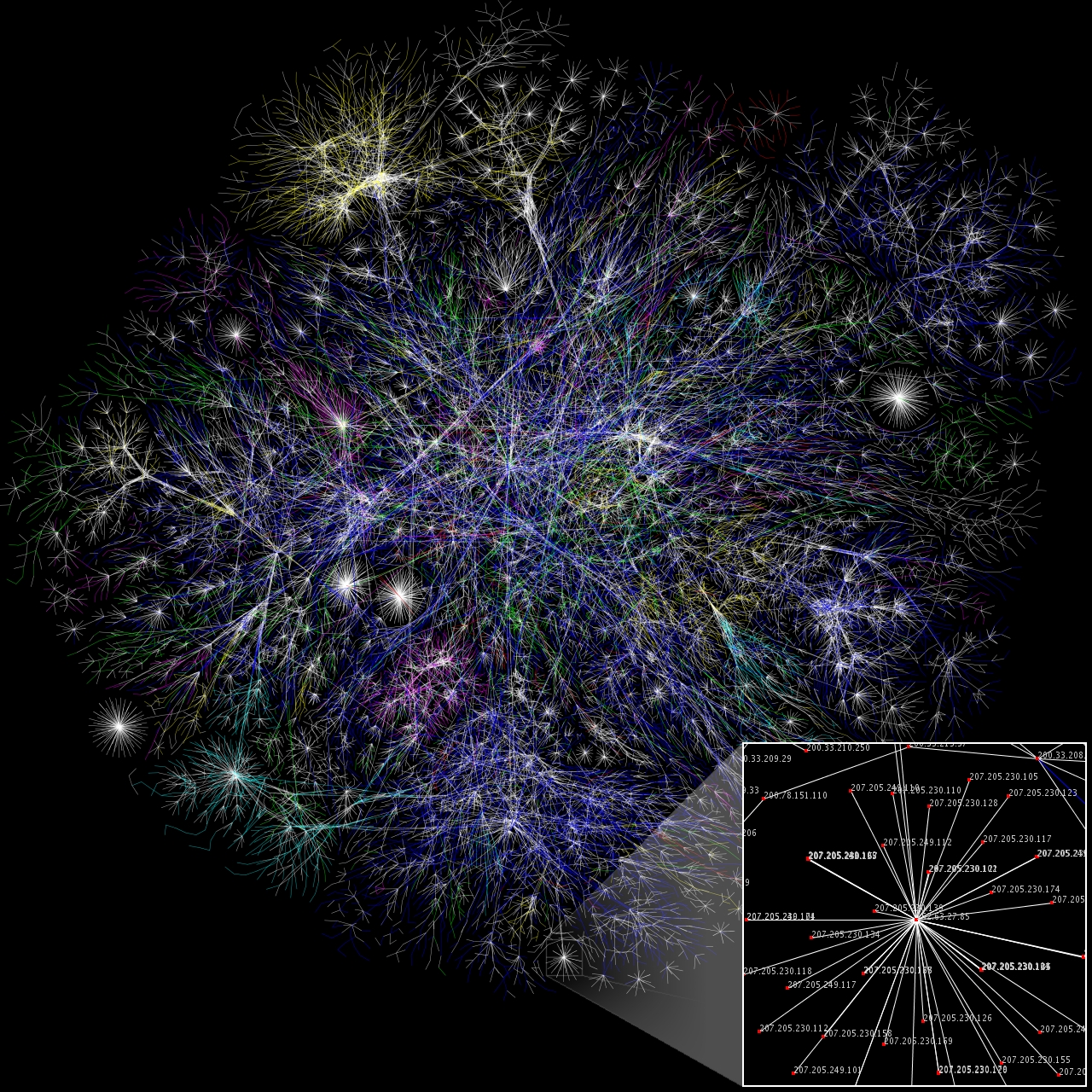
Map of the internet (from Wikipedia)
Transforming mailing from the traditional use of using ink-and-paper for the content, and on-foot, vehicles, ships and aeroplanes for the sending, to electronic data for contents and mouse-clicks for the sending; from physical-travelling-to-purchase-products, to online shopping; from the tangible newspapers, to online news; from brick-walled three-to-four-stories libraries and archives, to search engines – Google especially; from personal paper-and-ink logbooks or diaries, to public electronic logs – web-logs, shortened to a more easily and quickly pronounced ‘blog’; from  text blogging, to online video blogging (vlog) with the video sharing website – YouTube; from board games, to massive multiplayer online and to virtual worlds – World of Warcraft and Second Life respectively; from paper printed encyclopaedias, to free easily accessible online encyclopaedias opened to be edited by anyone – Wikipedia; from conventional socialising, to online and virtual social networking – especially Facebook, becoming the world’s identity registry; and from online social networking, to frequent instant personal, company, media, news and celebrity updates via the phone – Twitter; the internet has truly transformed human civilisation into a Global Village.

If there is a technology in the line of communications which can surpass the internet, one could only speculate of a technology which provides network coverage across the solar system and beyond.
Print Friendly and PDF

Friday, 26 August 2011

World Education Ranking on Reading, Math and Science

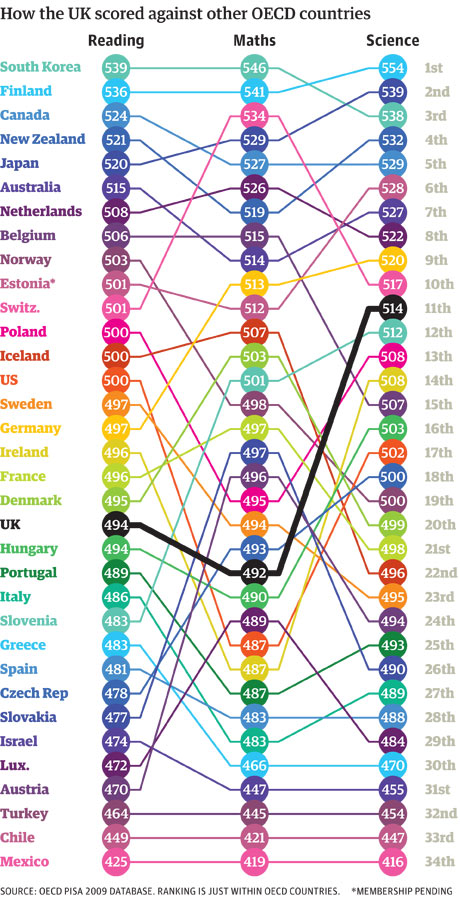
An interesting data comparing the education of various countries:


From Gurdian's article World education rankings: which country does best at reading, maths and science?
Print Friendly and PDF

Tuesday, 23 August 2011

What Lay People Should Know about Cloning – Ethical and Legal Issues (technical) [Part 3]

by Zad Datu


Preceeding linked article (Read first!):
What Lay People Should Know about Cloning – Animal Reproductive Cloning
What Lay People Should Know about Cloning – Other Types of Cloning
What Lay People Should Know about Cloning – Fear Fuelled Objections (opinion) [Part 1] [Part 2]


Return to [Part 1 (of 3)]
Return to [Part 2 (of 3)]


Human Cloning Attempts
Panayiotis Michael “Panos” Zavos from Kentucky Center of Reproductive Medicine & IVF, a Greek Cypriot from Cyprus and American citizen currently living in Lexington, Kentucky is an infertility expert who has devoted well over a quarter of a decade to academia and research and has had a long career performing IVF, whom later founded Zavos Organization in Lexington, has been saying since 2001 that the time to clone a human is already.

On 9th March 2001, Zavos alongside Severino Antinori, a controversial Italian gynaecologist and fertility doctor from Rome who have already made headlines when he enabled a 62-year-old woman, Rosanna Dell Corte from Canino, Italy to give birth on July 18, 1994, who became the oldest mother to give birth at that time, announced that they are fully prepared to perform therapeutic human cloning, seven months before the first human cloned embryo was successful, which did not even survive to the blasocyst stage. They even claimed to have rounded up a team of scientists and doctors who are ready to clone a baby by the end of 2002. Regardless of the risks known in the animal cloning experiments, Zavos and Antinori insist that it is safe to proceed with human cloning.


Zavos announced before the US Congressional committee Hearing on 15th of May, 2002 of his intention to clone a human being and that “There is every indication that 2002 will be the year of the clones,” but admitted that he may not be the first to succeed. He also suggested that the best way to deal with the risks of human cloning is to legalise and regulate it instead of banning it all together, as regardless of bans someone, somewhere will attempt human cloning.

Since then, there have been many controversial human cloning claims most of which were unconvincing as they lacked evidence, causing international uproars, scorned and condemned upon by mainstream scientists, described as irresponsible and misusing genetic science:
  • April 2002: Early in the month, Severino Antinori announced his claim at a genetic engineering conference at Abu Dhabi that a woman is 8 weeks pregnant with the world’s first human clone. No evidence was presented. Even his own former partner, Panos Zavos claims that there have been “no clones, no laboratory, no patients and no doctors to help him,” and this severed their affiliation. But Antinori later he claimed that he had no involvement in the pregnancies – plural, not singular – and that there were three women in their 9th, 7th and 6th week of pregnancy, which he got to know of from other doctors.
  • 27 December 2002: Brigitte Boisselier, a Raelean bishop (a religious cult with the belief that Earth life was created by an extraterrestrial species) and CEO of Clonaid (a human cloning company run by the cult) announced that a 31-year-old American woman gave birth to her own clone named Eve – another world’s first cloned human baby. With no surprise that no evidence was presented.
  • 17 January 2004: Zavos announced at a news conference in a central London hotel claimed to have implanted cloned embryos into a woman’s womb. Zavos said that it was too early to determine if the implantation is successful. Zavos published a paper on this procedure and claimed that the procedure was filmed by independent filmmaker, Peter Williams, and that DNA testing can be performed to confirm his claim. It was later revealed on 4th February that the attempt failed – that pregnancy did not take place.
In response to the numerous non credible claims, on January 21st 2004, the British scientific community and the Human Fertilization and Embryology Authority (HFEA) made a request to news editors in the UK not to give press coverage to Zavos’s cloning efforts and to “reconsider the prominence given to repeated claims by certain scientists that they have cloned a human being, including those made by Dr. Panos Zavos last weekend”.  The letter was signed by qualified scientists from many reputable institutions. Zavos took the effort to defend himself during the 31st August press conference later that year, which is meticulously presented in his webpage http://www.zavos.org/library/library_hfea.htm.
  • May 2004: Antinori restates his April 2002 claim of the three pregnancies at a press conference on reproductive technology in Rome still denying his involvement but that he only gave a ‘cultural and scientific contribution’ and confirming the births and that he knows they went well and confirming the fact exists whilst refusing to provide further details or evidence.
  • August 2004: Zavos claimed to have cloned human embryos once again, but from the DNA of two corpses belonging to victims of road accidents – Cady, an 11-year old girl and a 33-year old man – then implanting them into a woman’s womb, and once again it was filmed by Peter Williams and has published his work in an online medical journal run by one of the pioneers of IVF. Zavos later revealed that the surrogate mother failed be impregnated. Regardless of condemnations, Zavos sees himself to be helping families to create a genetic replica of loved ones who have passed away.
  • 2004 – 2006: Zavos have been publishing experimented on interspecies cloned embryos of human DNA from a man but an oocyte of a bovine (subfamily Bovinae, which includes cattle, bison, buffalo, yaks and antelopes) for research and practicing purposes as has been conducted by other scientists. He insists that he never intends to implant an interspecies clone for reproduction nor does he think it should ever be done.
  • Early March 2009: Antinori once again restates his 2002 claim, this time to Italy’s Oggi magazine, boastfully saying “I helped give birth to three children with the human cloning technique,” and “It involved two boys and a girl who are nine years old today,” adding and “they were born healthy and they are in excellent health now,” and that they are now living in Eastern Europe without providing evidence once again.
  • April 2009: Zavos attempted to clone Cady once again this time produce 14 embryos and implanted 11 of them into the wombs of 4 women who were paid up to £50,000, three of which were couples, one British, and the fourth was a single woman. As usual, no proof was provided nor did he submit any scientific publication. This again was filmed by Peter Williams (many of his films on Zavos procedure were presented on Discovery Channel) who testified the legitimacy of the procedure for reproductive purposes to The Independent adding that the women were genuinely hoping to become pregnant. But once again, all failed to achieve pregnancy. The location of the procedure is secret but is speculated to be in the Middle East.


Human Cloning Debates
Instead of allowing a sperm to fertilise with an egg, cloning uses a nucleus of a completely different kind of cell. Instead of having a sperm to fertilise the egg, electrocution is used. In cloning the chromosome of the ovum is removed and what else is removed along with that isn’t something we are entirely sure of.  Performing all these unnatural processes to produce and offspring is very likely to be of higher risk than that of natural processes. To assume safety is to be irresponsible, most scientists would say.

With the uncertainties of cloning we are yet to solve, cloning humans is just like using humans as guinea pigs for the cloning procedure. Even if the clones appear completely normal at the early stage of life, it is still very likely that abnormality and deformities as a result of cloning would appear in the later years of life, just as they do currently in animals. Zavos argues that since there already is a 3% - 4% of genetic abnormality for natural sexual reproduction, the imperfection from human cloning is just another form to live with.

Many dismiss Zavos’s TV documentary effort as simply attention seeking. Zavos argues that there is a demand for media coverage by the public in the field of human cloning and that advances in the technology should be presented to better inform the public to educate the public to decide for themselves whether they are against or for reproductive cloning. He states that many oppose human cloning out of the fear of what they do not know. Zavos, who claims to have inquiries from around 100 potential patients, truly believes that human cloning can brighten up the life of many infertile couples. He has receive inquiries to participate at international forums to present his data and have attended numerous press conference and interviews and intend to do so more in the future to educate the public on the technology.

Both sides agree that all the cloning experiments performed thus far are on animals and that they resulted in a high percentage of birth defects. It is the interpretation of this is what both sides don’t agree with. The human cloning proponents interprets this as that these birth defects may occur to human cloning as well if attempted, and that since that there are no cloning technique on animals which has a high success rate in developing normal babies, no one can guarantee a human cloning technique of high success rate especially that there hasn’t been any experiments on human cloning – that the implications of attempting to clone a human at this stage of cloning technology is unimaginable and it would be completely irresponsible to do so.

But Zavos interprets it otherwise. There are many instances in countless numbers of interviews where he states that just because all these birth defects occurs in animals, it doesn’t mean that it will occur in humans. He says that with over 25 years of experience working with human embryos in IVF procedures in his expertise, he can use the advance fertilization techniques which animal cloning procedures do not utilise, hence the chances of successfully producing a normal human clone is higher than that of animals. He obviously seems to think that he, who has never performed cloning – not even on animals – claims to know better about human cloning than the scientists who have been performing cloning on animals since Dolly in 1997 does. Whether his confidence and optimism is a result of flawed assumption or not is up to anyone to decide, but majority of the scientific community, even cloning experts, condemn his human cloning attempts.


Dr. Zavos has also said that he is against the idea of creating human embryos to experiment on them, then killing it. This is partially the reason why he wishes to go for the ‘instant success’ path and produce a normal human clone. But the first attempt of ‘instant success’ cloned baby would be a human guinea pig. This is why nobody, except for Zavos, dares to clone a human. Most scientists would prefer to have the perfect low risk animal cloning technique in their hands before attempting to try it on humans which sounds perfectly reasonable, but Zavos obviously seems to think that this is unnecessary.

Zavos remains firm that he does not intend to create deformed babies or break any laws. He will perform cloning in countries where cloning is not banned, but refuses to reveal where, and that the embryos will be thoroughly tested for chromosomal and other defects before implanting them and will abandon the procedure if any form of defects is discovered.
Print Friendly and PDF

Sunday, 14 August 2011

Killing Embryos vs Killing Grasses (comic)

The following directly relates to What Lay People Should Know about – Fear Fuelled Objections (opinion) [Part 2].


Related articles:
What Lay People Should Know about Cloning – Animal Reproductive Cloning
What Lay People Should Know about Cloning – Other Types of Cloning
What Lay People Should Know about Cloning – Fear Fuelled Objections (opinion) [Part 1] [Part 2]
What Lay People Should Know about Cloning – Ethical and Legal Issues (technical) [Part 1] [Part 2] [Part 3]
WLPSK Extended Article on Cloning – History of Animal Cloning (technical)
Print Friendly and PDF

Friday, 12 August 2011

WLPSK Facebook Page

What Lay People Should Know now has a facebook page.
Click "Like" on the sidebar or on the image below visit the page:


Print Friendly and PDF

Tuesday, 9 August 2011

What Lay People Should Know about Cloning – Ethical and Legal Issues (technical) [Part 1]

by Zad Datu


Preceeding linked article (Read first!):
What Lay People Should Know about Cloning – Animal Reproductive Cloning
What Lay People Should Know about Cloning – Other Types of Cloning
What Lay People Should Know about Cloning – Fear Fuelled Objections (opinion) [Part 1] [Part 2]


Ethical Debates on Killing Embryos
As definitive as I have attempted to establish that human embryos are not humans in the previous article, I doubt that the debates would ever end. Defining what it means to be a person is very subjective and has caused many evil acts in the past. Slavery and the massacre of indigenous people were results of subjective definitions which disregards certain races as not people or not humans.


Many scientists and scientific books on embryology state that human life begins at conception. Some argues that conscious life only begins when the heartbeat develops, which is during the 5th week of pregnancy, or when the brain begins developing activity, which has been detected at 54 days after conception. One fact which I can insist on is that embryos do not and never did have conscious feelings and thoughts.

A report in the British Medical Journal states that foetuses cannot feel pain because it requires mental development that only occurs outside the womb. Also, according to Dr Stuart Derbyshire, of the University of Birmingham, a baby's subjectivity of pain is enabled by actions and relationships with carers. But interestingly and not surprisingly enough, pro-life groups say foetuses respond to stimuli from 20 weeks.

But scientist proponents of therapeutic cloning says that embryos are not equivalent to human life as they are still incapable of surviving outside the womb – that they are only potential humans. They state that more than a third of zygotes do not implant after conception, and that far more embryos are lost due to chance than are proposed to be used for embryonic stem cell research or treatments.

A rebuttal to this is that in some countries, a relatively high percentage of children die before a certain age. Should we allow killing of children? The way I see it, this is a bad analogy as these children are capable of experiencing pain and suffering, whereas embryos are not. Another rebuttal could be regarding comatose patient whom are technically described as those who cannot be awakened, fails to respond normally to painful stimuli, light or sound, lacks a normal sleep-wake cycle and does not initiate voluntary actions. Since they are in such a state, should we allow the killing of comatose patients? The answer should be “no” because they have the potential of awakening just as those who are asleep where some who do not respond to pain in their sleep.

Coma can last from days to weeks and even years, where some regain consciousness to a stable condition, some to a vegetative state, and others die. Wouldn’t this mean that comatose patients are only potential consciousness, just as embryos are simply potential humans? Should we allow the killing of comatose patients? The difference between them and embryos is that the patients have already lived their lives as fully developed and conscious human beings whom had rights, ambitions and dreams. They do not just have the potential to regain consciousness, but potential to recover to the life they were living.

Babies born in a coma state are not and probably never were capable of pain and suffering. This is no different from embryos which never were capable of pain and suffering but only have the potential, and to define that babies aren’t fully developed humans is as valid of an interpretation as stating that embryos are not humans, since there isn’t a scientific fine line to define the matter. Is it then reasonable to kill babies born in such conditions? Surprisingly, I came up with this argument against my own logic by myself. Did I just defeat myself? I have a response to this, actually.

If the baby was intended to be raised as a son or daughter, which I certainly hope is the case, then of course it would be immoral to shatter the parents dream by killing the baby. But the parents should have the rights to have the baby subjected to euthanasia if all treatments to awaken the baby fail and if it’s concluded that nothing can be done. But if a comatose baby which never did and never will develop consciousness and experience suffering is produced with the intent to be killed and used for research and treatment purposes, if that is possible in the first place, as disgusting as I am going to sound, I suppose it isn’t a horrible act based on the “doing harm” logic for the baby. But it does harm the mother, so it is horrible. What kind of mother would be willing to go through the pain of labour for nothing? Neither I nor anyone would support such a procedure even if it is for research or treatment. Even if a woman is willing to be paid for such a procedure, there is a major concern – the exploitation of women’s body which may lead to a new form of human trafficking.

This is actually another interesting point made by opponents of embryonic stem cell research – that vulnerable women will be walking ovary factories exploiting their bodies, vulnerable to human trafficking. Former US president George W. Bush himself addressed this issue in his speech on April 10, 2002 to call back the senate to back the banning of human cloning where he says “This would create a massive national market for eggs and egg donors – an exploitation of women’s bodies that we cannot and must not allow.”

There already are about an estimate of 400,000 available frozen embryos in laboratories in the US alone which may never find its way into the womb as a result of in vitro fertilisation where only a selected few are implanted to successfully conceive a baby. Some of these excess embryos are implanted into adopted mothers to be born as healthy babies, some are donated to stem cell research, some are destroyed and some may not survive after long storage. So the argument is that we might as well use these embryos for stem cell research which kills them in the process rather than letting them die as waste. Some rebut this by questioning if it is then acceptable to kill those who are nearing their deaths for research purposes. The flaw in this rebuttal is that embryos do not and never did have conscious feelings and thoughts, whereas people nearing their deaths do.


Embryonic Stem Cells vs. Adult Stem Cells
Criticisms on the killing of embryos do not hold only for therapeutic cloning, but embryonic stem cell research as a whole. Besides criticising the field for the ending one life for the benefit of another, opponents of therapeutic cloning also criticise on the possibilities of therapeutic cloning, that they are just possibilities and has not produced any results of success, whereas the alternative technology of adult stem cells therapy has its successes in curing patients.


Human embryonic stem cells were first derived in 1998 by James Alexander Thomson from the University of Wisconsin-Madison who received patents related to a method of “isolating embryonic stem cells of humans and primates”, although there is an earlier documentation on the isolation of inner cell mass from a human blasocyst in 1994 by Ariff Bongso and colleagues from the Department of Obstetrics and Gynaecology, National University Hospital.

Even the first human cloned embryo by Robert Lanza of Advanced Cell Technology in Worcester, Massachusetts in 2001 only produced 3 embryos out of 9 Somati Cell Nuclear Transfers (SCNT) in which none reached the blastocyst stage. The largest stopped developing only after splitting into 6 cells after three days and the other two spitted to only 4 cells. The team also performed induced parthenogenesis (a form of asexual reproduction in females where development of embryos occur without fertilisation by a male which occurs naturally in plants, common in insects and few vertebrates but not humans) on 22 human ova which succeeded in developing 6 blastocyst, but none contained the inner cell mass of which stem cells are located. Induced parthogenesis is artificial asexual reproduction hence technically is cloning, but scientists often refer to “cloning” primarily to the SCNT method, and artificial parthenogenesis of ova as “induced pathogenesis” which can only produce females.

The first successful human cloned blastocyst via SCNT was announced only in February 2004 by Hwang Woo-Suk, a South Korean established as an expert in animal cloning of celebrity status after his well received claims of successes in creating a cloned dairy cow in February 1999, another cow later on April that year, and also a BSE-resistant cow as well as the intention to clone a Siberian tiger. This human cloned blastocyst success was published in March 12th Issue of Science. Later in May 2005, Hwang’s team announced to have created 11 human embryonic stem cells which was then published in June 17th issue of Science. Parallel to these successes, in the same month of the same year, Miodrag Stojkovic, professor of embryology and stem cell biology at Newcastle, and his colleagues succeeded in producing 3 cloned embryos which survived up to the blastcyst stage, but these were clones from human embryonic stem cells of discarded embryos and yet they failed to produce a stem cell line. Deceivingly, it turns out that all Hwang’s claims were fraudulent. There are still no stem cells from cloned embryos to date.

It was four years after the fraud, 17th January 2008, when the first matured human embryos were cloned via SCNT by Stemagen, a privately held embryonic stem cell research company in Carlifonia, as announced by the Chief Scientific Officer, Andrew French. Stemagen’s founder and CEO, Samuel H. Wood, one of the country’s most highly respected fertility specialists, used his own skin cells and 25 donated mature oocytes (the germ cells (mother cells) of ova) to produce five blastocyst. French said that “No other scientific group has documented the cloning of an adult human cell, much less been able to grow it to the blastocyst stage, the stage at which it is the adult donor cell that is driving embryonic development, the stage that yields the cells (the inner cell mass) from which embryonic stem cell lines are made.”

Apparently, this achievement had mixed reviews by the embryonic stem cell research community. President of California’s Stem Cell Institute, Alan Trounson said “(This) is a very challenging area, and there are not many players in it because of its difficulty,” adding “This is some of the best work I've read about in this area.” Director of the Human Embryo and Embryonic Stem Cell Center at Stanford University, Renee Reijo Pera, wasn’t impressed with the quantity or quality of the embryos as and called it “a reasonably small step forward.” Robert Lanza of ACT said that the report did not show the result of molecular tests scientists normally do to prove the completion of the cloning process and said “I'd really like to believe it, but I'm not sold yet.” Miodrag Stojkovic on the other hand defended the research by saying “Stemagen's work is the first time anyone has documented that this could be done with adult skin cells,” and that the work was important enough to be published in a scientific journal.

On top of these, embryonic stem cell research has still yet to overcome problems and challenges before shifting its theoretical potentials into reality. Scientists are most concerned about the development of tumours in the transplanted tissue, which has bee proven as an occurring setback in experiments with histocompatible animals. Scientists are yet determine an appropriate state and conditions of and for differentiation of embryonic stem cells into specialised cells before transplantation, and to establish protocols for these states and conditions. This is a difficult feat due to the speed at which embryonic stem cells grow which may be uncontrollable resulting in tumours. Targeting the differentiated cells to the appropriate part of the organ also proves as a hurdle.

Common rejections of transplanted tissues occur because all cells carry antigens by which immune systems recognise. There are countless numbers of possible combinations of antigens, and if the combinations do not match, the tissue is likely to be rejected. Due to this it seems that countless numbers of embryonic cell lines is required in a bank. The best solution for this is to create an embryonic stem cell line from the patient’s own genetic material for him or herself through therapeutic cloning. But experiments in mice results in rejection of tissues derived from the specimen’s own cloned embryos.

Even if each of these problems were solved, it is estimated that the cost for the procedure is over 200,000 USD in the US, as the budget for the human oocyte material alone, which is needed to generate a customised set of nuclear transfer embryonic stem cell lines for one patient, is estimated to cost form 100,000 and 200,000 USD. Only the very wealthy could afford this, making the technology impractical and expensive to ever become widely available. On the other hand, adult stem cells require little of no manipulation, and although relatively rare, they are readily available in the patients, making the cost far more reasonable than that of embryonic stem cells.

In contrast to the development human embryonic stem cell research, human adult stem cell research first began as early as the 60’s which even succeeded in treating a patient with severe combined immunodeficiency disorder in 1968. Types of adult stem cells range from blood-forming stem cells (hematopoietic stem cell) found in bone marrows, to mesenchymal stem cell which has the ability to differentiate into various types of cells and is also found in bone marrows (as well as placenta, adipose tissue, lung, umbilical cord, and even teeth), blood vessel lining stem cells (endothelial stem cells) which is also found in the bone marrow, mammary stem cell from mammary gland (milk producing organ), and to neural stem cell found in brain tissues, and more. Since the early 70’s, hematopoietic stem cells have been treating cancer conditions such as leukaemia and lymphoma – to recover the hematopoietic cells which were killed during chemotherapy.

Hematopoietic and stromal stem cell differentiation
[image from http://stemcells.nih.gov] (© 2001 Terese Winslow)

Scientists have also discovered that adult stem cells have more plasticity then once thought. It was discovered that multipotent (capable to differentiate to a limited number of cell fates) adult progenitor cells (MAPC) found in bone marrows seem to have ploripotent (capable of differentiating into all types of cell) potentials both in vivo and in vitro as they are said to be able to develop into all of the 210 different tissue types in the human body. This has been suggested as an alternative to embryonic stem cells.

Despite the facts of “embryonic stem cell vs. adult stem cell” presented by opponents of embryonic stem cell research and therapeutic cloning, there have been a small light of success in India. Dr. Geeta Shroff, an infertility expert became the first person to develop pure human embryonic stem cell lines developed from just one donated embryo from an IVF donor. She has been treating over 700 patients from all over the world including from the United States with conditions such as autoimmune disorders, cardiac disorders, Alzhimer’s disease, multiple sclerosis, renal failure, cerebral palsy, diabetes and mainly spinal cord injury, where many of those unable to walk for years find themselves taking their first steps after undergoing weeks of injections along with intense physical therapies since 2002 at the Nu Tech Mediworld hospital in New Delhi. The procedure costs around 20,000 to 30,000 USD and none of which showed any signs of side-effects. In India, there never were controversial issues and fusses made on the destruction of human embryo, and the Indian Council of Medical Research (ICMR) allows the use of embryonic stem cells only on conditions considered to be incurable and terminal.

Nevertheless, some scientists and stem cell researchers in the West consider that these patients flocking to Shroff are placing themselves at huge risk to undergo experimental treatments, as there is a lack of legislation governing the use of stem cell in India as well as other developing nations. As controversial fields are bound to have controversial issues, there are also criticisms mainly from the west on the legitimacy of her claims. This is mainly because instead of publishing her research to be submitted to peer-review, which is a common practice for good science, she patented her technology with the World Intellectual Property Organisation, covering over 126 countries. Criticisms have been worded as “patients could be injected with anything without knowing” and “taking advantage of desperate patients.”

But as in all cases, where there are opponents, there are proponents. The first American physician who visited the hospital, Dr. Laurance Johnston, director of the Spinal Cord Research and Education Foundations, Paralyzed Veterans of America and was a person of high credentials. He was impressed by Shroff’s treatment and was convinced that she is sincere and conscientious in her endeavors and also said “I think India is at the forefront of emerging stem-cell treatments in many ways.”

[Continue to [Part 2 (of 3)]
Sections in the part 2:
  • World Cloning Laws
  • Reactions on Animal Reproductive Cloning
Sections in the part 3:
  • Human Cloning Attempts
  • Human Cloning Debates
Print Friendly and PDF

Friday, 5 August 2011

Cloning from Family Guy (video; humour)

This may not be entirely fitting, but there are some relevance to the current series of articles.
Just for the fun of it... Watch and enjoy:


Related articles:
What Lay People Should Know about Cloning – Animal Reproductive Cloning
What Lay People Should Know about Cloning – Other Types of Cloning
What Lay People Should Know about Cloning – Fear Fuelled Objections (opinion) [Part 1] [Part 2]
What Lay People Should Know about Cloning – Ethical and Legal Issues (technical) [Part 1] [Part 2] [Part 3]
WLPSK Extended Article on Cloning – History of Animal Cloning (technical)
Print Friendly and PDF